lab research
At a high level, our research is focused on 1) conservation ecology of native
semi-aquatic and aquatic species in western Canada, and 2) the health of their
habitats. Cognizant of the lands we live and work on, we strive to work in a good way
with local First Nations and Métis individuals, communities, and organizations
(e.g., UToday article).
Over the next five years (2026-2030), together with
(Dr. Ben Barst) and
local First Nations communities in the Treaty 7 region,
we will be examining the health of the Bow and Oldman Rivers from headwaters to prairies,
with an eye to performing targeted conservation translocations of bull trout in an attempt
to restore populations at sites within their historical range. As mentioned in this
UToday article,
Dr. Barst will focus on water quality and trace metals and we will focus on diversity and
health of aquatic macroinvertebrates as indicators of site health and capacity to
sustain fish populations.
Some recent investigations include beaver impacts on aquatic macroinvertebrate diversity
and mercury levels in water and dragonfly larvae (Grégoire, in progress), a multi-year examination of the status and long-term
viability of long-toed salamanders in the Bow and Kananaskis Valleys
(Baumgartner, 2024),
Pacific salmon and ecosystem function through Western science and Indigenous, Teslin
Tlingit knowledge
(Connoy et al., 2024),
and population genetics of bull trout in protected headwaters
(Carroll & Vamosi, 2021).

Marine-derived nitrogen levels are significantly higher at a site where Chinook salmon
historically spawned (Positive Control) than where they were absent
(Negative Control), underscoring the ecosystem-wide consequences of their crash
(for more, see
Connoy et al., 2024).
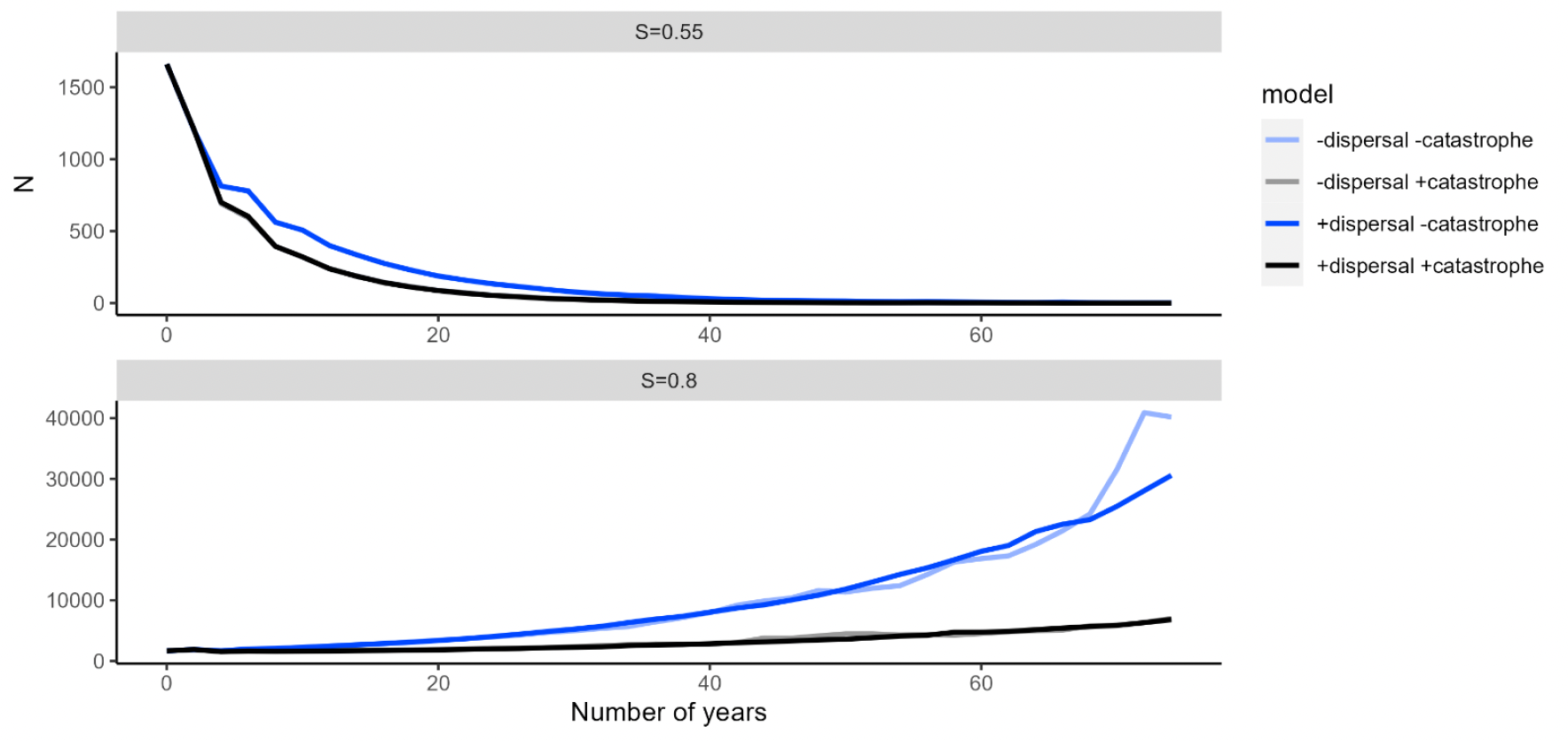
Results of population viability analyses underscoring the importance of high adult survival,
dispersal, and an absence of catastrophes (e.g., severe drought) for the
long-term persistence of long-toed salamanders (for more, see
Baumgartner, 2024).
Climate change and ongoing development in the region negatively impact all three factors.
lab ethos and values
Our research is better when we include people with diverse experiences, backgrounds, and ways of thinking and interacting with the natural world. Accordingly, we seek to recruit, support, and mentor members from diverse backgrounds, with an active focus on folks from historically marginalized groups. The sciences have not always been a welcoming space for everyone, and we actively work to create an inclusive environment. We affirm that LGBTIQ+ rights are human rights. We also acknowledge that fostering inclusion is an ongoing and evolving process, not a one and done
item to be crossed off a checklist.
Field-based ecology brings its own particular challenges on top of these. Much of our work happens outdoors, in remote places, in small parties, and often for long stretches, and the traditions of the field have not always accounted for the realities these conditions impose on everyone. We refuse to treat those challenges as someone else's problem. Among our concrete actions, we:
• never send anyone into the field alone;
• modify or design overnight itineraries when a trainee's caregiving responsibilities, religion, or other circumstances make them difficult;
• tailor field roles so that heavy or physically demanding tasks are shared, not assumed to fall to particular people, and adapt duties where health, caregiving, disability, or other circumstances require it;
• budget fieldwork realistically so that cost, gear, or travel never silently exclude a student, and make expectations about time away from home explicit from the start;
• deliberately make space and time in lab meetings for quiet voices;
with the aim of fostering an environment in which people can speak openly about mental health and workload, and treating accommodations as normal rather than exceptional.
These practices reflect a belief we hold without apology: a lab that encourages diversity and attends to the human conditions of its work produces better, more honest science.